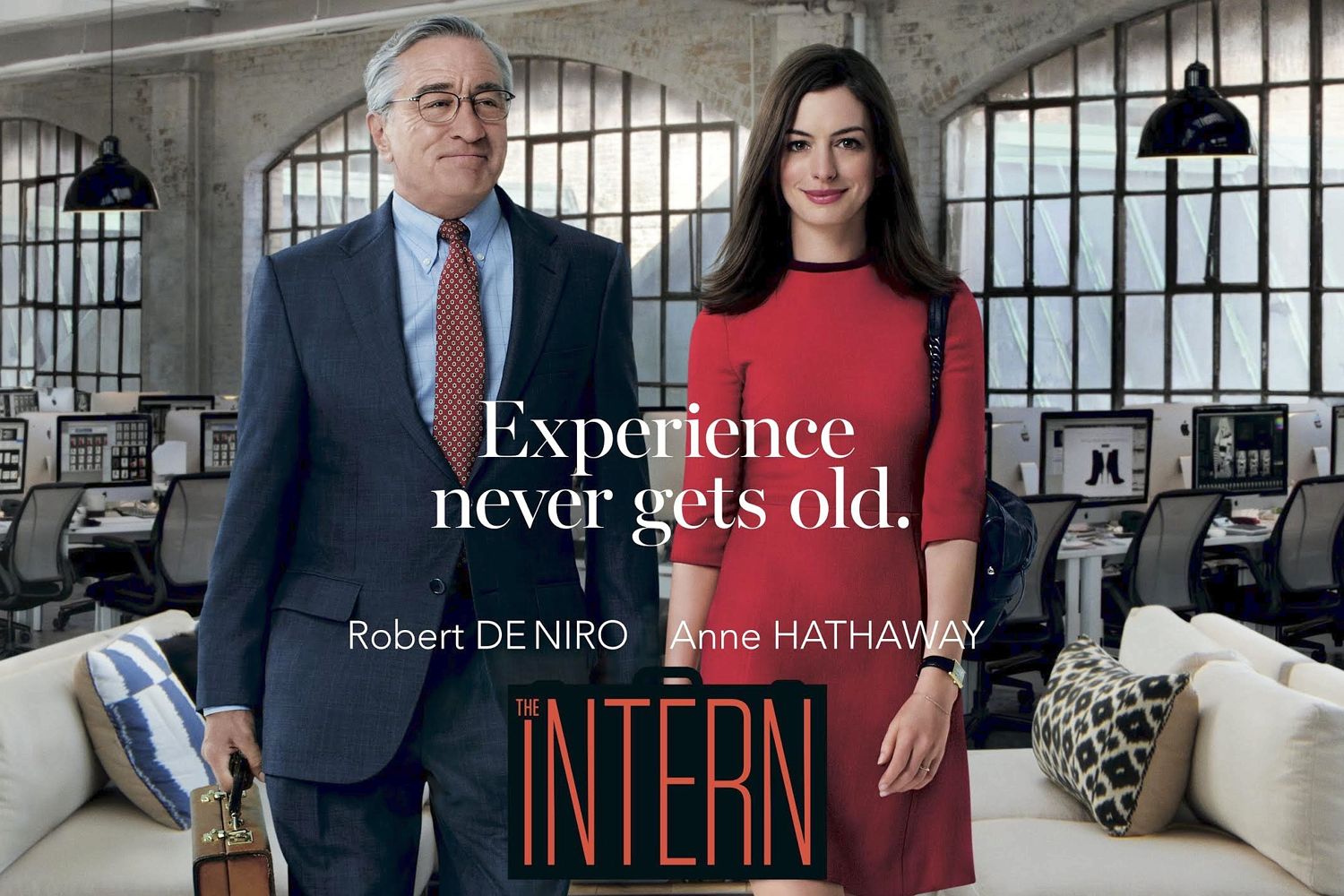
If you look at the media—or the hoodie-wearing pattern-matching of Silicon Valley—you’d think entrepreneurship is a young person’s game. The narrative is seductive: a 20-year-old college dropout with a prophetic vision and a “move fast and break things” appetite for risk.

Here’s the problem: That story is a statistical anomaly, not a rule.
If you’re sitting in an office today, mid-career, wondering if you’ve missed the boat because you didn’t start a unicorn in your dorm room, I have some news that might feel like a cold shower (the good kind). The data suggests that your experience, your deliberate management study, and your graying temples are actually your greatest assets.
Let’s dismantle the myths and look at the empirical reality of what actually wins in the arena.
1. The “Peak Age” Paradox
We’ve fetishized youth to the point of absurdity. But when researchers analyzed the top 0.1% of high-growth startups in the U.S., they found the average founder age wasn’t 22. It was 45. [1]
A 50-year-old founder is roughly 2.1 times more likely to achieve upper-tail growth than a 30-year-old. [1] Why? Because by 45, you have something a “prodigy” doesn’t: Execution Knowledge. You understand procurement cycles, regulatory hurdles, and how to bridge “structural holes” in a network to actually get things done.
The Nugget: Experience doesn’t make you risk-averse; it makes you a superior risk manager.
2. The Solo Founder Advantage
The current venture capital orthodoxy says you must have a co-founder because “starting a startup is too hard for one person.” [8]
The data from Wharton and NYU Stern tells a different story: Solo founders are significantly more likely to succeed than co-founding teams in the for-profit sector. In fact, solo founders are 2.6x more likely to own an ongoing for-profit venture. [9]
Why? Consensus Traps.
In a startup, speed is your only weapon. Co-founders often get stuck in “consensus traps,” slowing down decision loops to appease everyone. A solo founder maintains “dictatorial agility”—you can pivot, hire, or change pricing without a board meeting. Unless a partner brings an indispensable, complementary skill, you are statistically better off alone. [9]
3. Gender Arbitrage: The “Alpha” of Female Founders
There is a massive market failure in VC funding. All-female teams receive roughly 2.3% of global funding, while male teams get over 83%. [10]
But here’s the arbitrage: Startups founded by women are 2.5x more capital-efficient. [12] For every dollar invested, female-founded startups generated 78 cents in revenue, compared to just 31 cents for male-founded startups. [12] Scarcity-induced discipline forces an earlier focus on product-market fit and sustainable models.
If you’re an investor, checking your bias isn’t a social mission—it’s a fiduciary duty to find the better return.
4. Stop Predicting, Start Effectuating
Most MBAs are taught “Causal Logic”: If I can predict the future, I can control it. This leads to 50-page business plans that are obsolete the moment they hit the market.
Expert entrepreneurs use Effectual Logic: To the extent I can control the future, I don’t need to predict it. [22]
They use the “Affordable Loss” principle—investing only what they can afford to lose to cap the downside while leaving the upside open. [24] They don’t wait for the “perfect” idea; they start with the “Bird-in-Hand”—who they are, what they know, and who they know.
5. The “Silver Tsunami” Opportunity
You don’t have to build a “zero-to-one” moonshot to be an entrepreneur. There is a demographic wave of Baby Boomer owners reaching retirement with no succession plan.
This is the world of Entrepreneurship Through Acquisition (ETA). Search funds have an aggregate pre-tax IRR of 35.3%. [15] While 75% of venture-backed startups fail to return capital, 73% of search funds generate a profit. [15, 17]
For the risk-adjusted optimizer, buying a profitable company with established cash flow is often the most rational path to wealth and autonomy.
The Bottom Line
Entrepreneurship is a discipline of “effectual” action, not a lottery of birth or youth. Whether you are a veteran transitioning to the civilian world or a mid-career executive tired of the corporate grind, the deck is actually loaded in your favor—if you know how to play the hand.
It’s a harder path, yes. But according to Gallup data, “owner-employers” report the highest levels of engagement and life satisfaction among all worker types. [27]
Are you ready to be challenged?
If you’re tired of the “Wunderkind Myth” and want to build something based on data and disciplined execution, let’s talk.
Footnotes & Citations
[1] Azoulay, Pierre, et al. “Research: The Average Age of a Successful Startup Founder Is 45,” Harvard Business Review. https://hbsp.harvard.edu/product/H04FLQ-PDF-ENG
[8] “As a predictor of startup success, what’s better: solo founders or founding teams?” Medium. https://medium.com/the-launch-path/as-a-predictor-of-startup-success-whats-better-solo-founders-or-founding-teams-20f4518dbfc3
[9] “2 founders are not always better than 1,” MIT Sloan. https://mitsloan.mit.edu/ideas-made-to-matter/2-founders-are-not-always-better-1
[10] Founders Forum Group. “Women in VC & Startup Funding: Statistics & Trends (2025 Report).” https://ff.co/women-funding-statistics-2025/
[12] Boston Consulting Group (BCG). “Why Women-Owned Startups Are a Better Bet.” https://www.bcg.com/publications/2018/why-women-owned-startups-are-better-bet
[15] Stanford GSB. “Search Funds Show Strong Performance in Acquisitions and Returns.” https://www.gsb.stanford.edu/insights/search-funds-show-strong-performance-acquisitions-returns
[17] Embroker. “110 must-know startup statistics for 2025.” https://www.embroker.com/blog/startup-statistics/
[22] Sarasvathy, Saras. “Causation and effectuation processes: A validation study.” https://effectuation.org/hubfs/Journal%20Articles/2017/05/Causation-and-effectuation-processes.pdf
[24] UVA Darden School of Business. “Effectuation – Overview.” https://www.darden.virginia.edu/effectuation
[27] Gallup News. “Employing Others Is Linked to Wealth and Wellbeing.” https://news.gallup.com/poll/643268/employing-others-linked-wealth-wellbeing.aspx
Leave a Reply